Pleural effusion / fluid around the lungs
Challenges and treatment explained clearly!
Overview
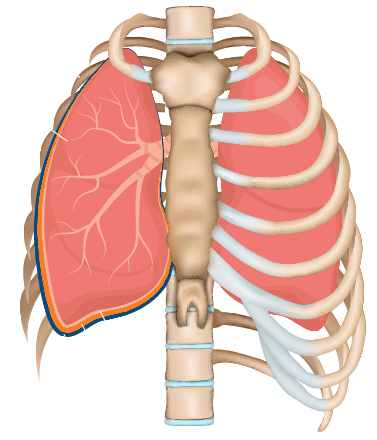
The pleura is a thin, double-layered membrane in the chest. The inner layer covers the surface of the lungs and is called the visceral pleura. The outer layer, the parietal pleura, lines the inside of the chest wall. The pleural space lies between these two layers. It normally contains a few millilitres of fluid, allowing the layers to move smoothly against each other during breathing—similar to two panes of glass separated by a thin film of liquid.
A pleural effusion is an abnormal build-up of fluid in the pleural space. It should not be confused with pulmonary oedema, in which fluid accumulates within the lungs. In a healthy person, a few millilitres of fluid allow the two pleural layers to move smoothly and without pain.
In a person with a pleural effusion, fluid collects between the chest wall and the lung. As the amount increases, the fluid can restrict breathing because the lung can no longer expand fully.
Living with pleural effusion
Pleural effusion can significantly affect physical and emotional wellbeing. Learn how to manage symptoms in everyday life and support your quality of life.
Causes
A pleural effusion is often a sign of an underlying condition. Learn about its possible causes and how they are assessed.
Symptoms
Depending on the cause, a pleural effusion may develop slowly or quickly. Symptoms range from barely noticeable to severely limiting. Learn more about common symptoms and how they can vary.
Diagnosis
A pleural effusion should be investigated promptly because it may be caused by a serious underlying condition. An accurate diagnosis is essential for targeted and effective treatment.
Treatment
Treatment depends on the cause of the pleural effusion. In addition to pleurodesis and thoracentesis, an indwelling drainage system can provide a less invasive option for regular drainage and greater independence.
Videos
Our videos explain pleural effusion, its effects and the available treatment options.
AT A GLANCE
Most common causes of pleural effusion
- Cancer
- Heart failure
- Pneumonia
Symptoms of pleural effusion
- Shortness of breath
- Chest pain or pressure
- Cough
Common descriptions of pleural effusion
- Fluid in the lungs
- Fluid around the lungs
- Ansammlung von Fluid in the lungs
Treatment of pleural effusion
- Thoracentesis
- Pleurodesis (talc/VATS)
- Pleural catheter for drainage
Drainage is very straightforward with the drainage system. Before, I had to go to the emergency department twice for thoracentesis. That is no longer necessary. I used to panic whenever I became short of breath.
– Mr B., Sachsenhausen / pleural effusion –
Benefits of ewimed drainage systems at a glance
Do you have any questions?
Contact us or browse a selection of frequently asked questions from patients.
Do you have any questions?
Contact us or browse a selection of frequently asked questions from patients.